During a discussion about the relative governance capacity of China and the US, guest Kaiser Kuo:
When a word like “affordability” becomes the most important word in electoral politics, that to me suggests that performance legitimacy is bearing a little more weight now, and that process legitimacy is bearing a little less in my native U.S. That advantage goes to China. …
What puzzles me about the United States is its insistence that there is only one way that you have to privilege civil and political rights above economic rights, and that’s the only way that it can be done; that economic development will necessarily flow from the safeguarding of civil and political and property rights.
I think that we should maybe expand our thinking, and embrace a kind of pluralism when it comes to how different nations of the world prioritize these values — that it’s a valid thing — and I think probably one that much of the so-called global south would understand implicitly, because it’s based on that Maslow’s hierarchy of needs: that you need to take care of food, clothing and shelter first.
I don’t think it’s a matter of regime type. I think that much of it has to do simply with capacity building, with state capacity. However you arrive, however these people are placed into office, but putting a developmentally minded, more technologically or technocratically sophisticated class of politician into office.
“Performance legitimacy” and “process legitimacy” are a clever framing, and it’s tempting to engage in that discussion. Which system is delivering what the people want? Which will be more successful over the long term?
To accept the assumption of that debate—that civil and political rights and economic rights can be traded off—is already a loss.
Democracy is humanity’s greatest, most precious, and most precarious achievement. It is the recognition of the dignity of human life, and of the right of an individual and a people to make of their lives what they will, together. It is the culmination of centuries of struggle and has pulled billions out of the repression that so much of humanity suffered for millennia. The idea that its time is passing because eggs are expensive is absurd.
By now, it’s obvious that American democracy is in crisis. It’s not merely that an anti-democratic administration made it into office, twice, or that institutions are straining under the pressure of strongman rule. It’s that anti-democratic arguments are gaining currency with the public.
MAGA’s version is out in the open: strongman rule, a primitive idea with evergreen appeal. The great man knows what to do to restore the glory of the nation, and is held back by a democratic system that caters to the weird, weak, and unworthy. So, clear away the procedures that keep him from doing what must be done.
Kuo’s argument arrives at a similar place in the language of the left: challenging autocracy is a kind of bigotry, and defending civil rights a kind of elitism. The public needs food, and shelter, and education, and transportation, and if the bloated process of democracy can’t deliver these, sweep it aside so smart people with good intentions have the authority to do the work.
Each argument has a rhetorical strategy for sliding past an American audience that was taught to love democracy. MAGA’s is to simply reverse every charge: voter suppression is really an attempt to eliminate voter fraud; pardoning the President’s partisan insurrectionists is really protecting them from unfair prosecution. Kuo has a different approach: flattening democracy into a bloodless, analytical term like “process legitimacy,” and then appealing to material equity. It’s easy to see the appeal, particularly now: if democracy delivers Trump, is it worth fighting for?
That term deeply dishonors the sacrifice that it took to secure freedom and political liberty. Its opposite, “performance legitimacy,” whitewashes the misery and death millions have suffered under autocracy, and the suffocating repression that still happens within sight of those very tall skyscrapers and very fast trains.
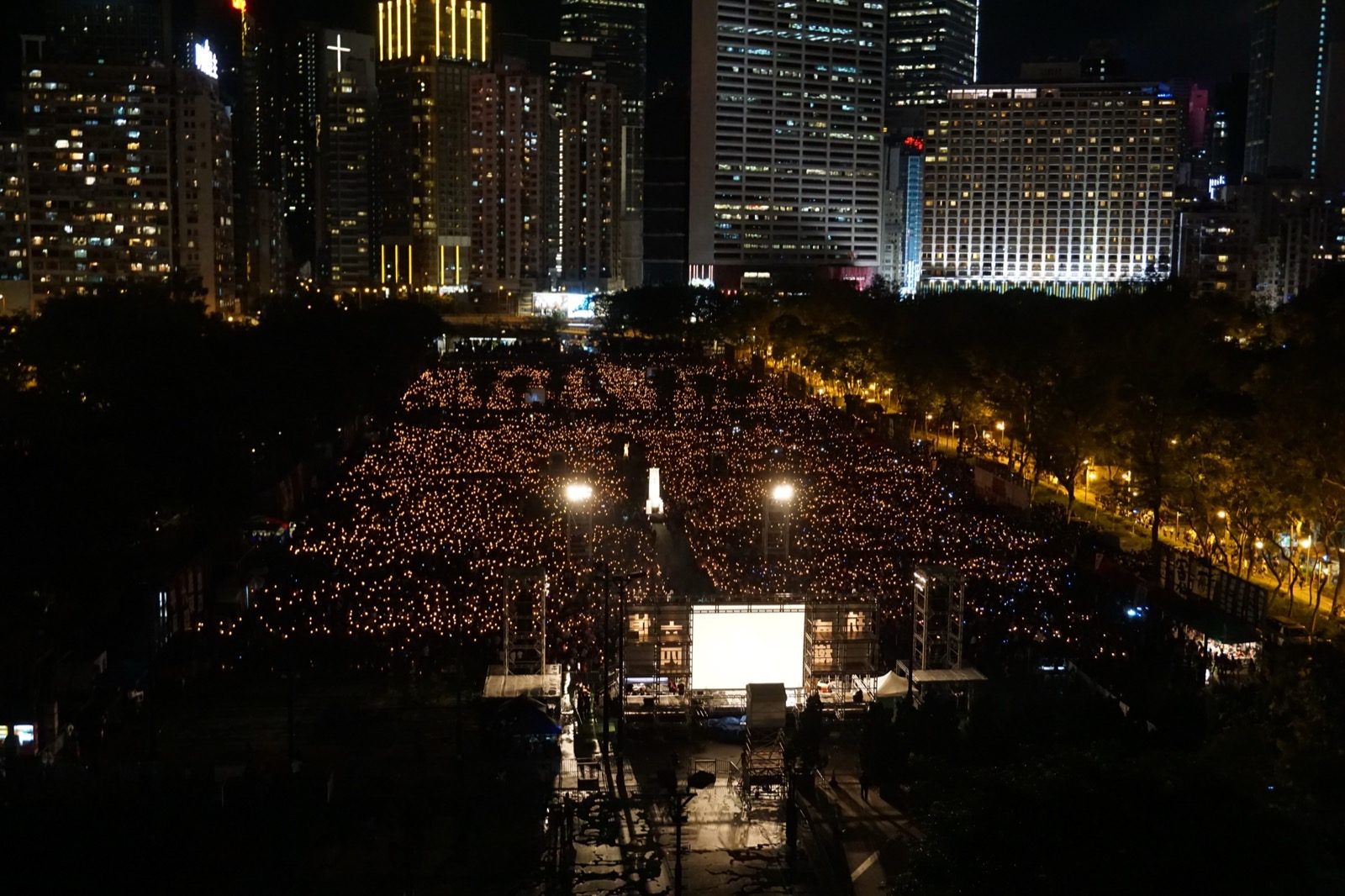
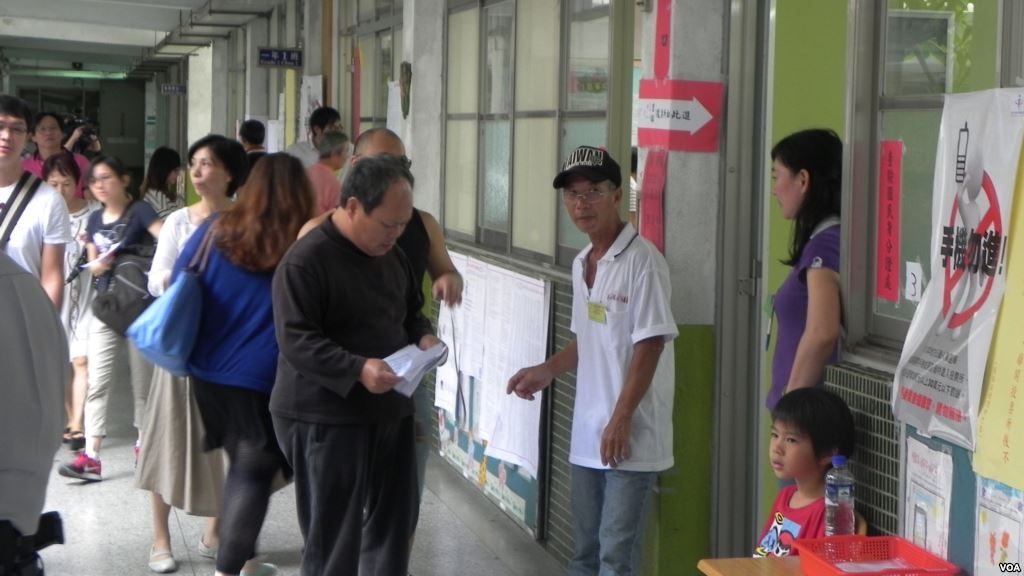
Candlelight vigil for the victims of Tiananmen Square, Victoria Park, Hong Kong.Victoria Park, Hong Kong, 4 June 2018. Photograph: Wikipedia user Prosperity Horizons (CC BY-SA 4.0)Voters waiting to cast their ballots, Taipei, Taiwan.Taipei, Taiwan, 29 November 2014. Photograph: Xu Bo / Voice of America (public domain)
Today, with No Kings rallies attracting crowds across the country and Americans souring on their outlaw administration, we have not yet lost our democratic commitment. Still, there are moments like this episode.
It’s good that the New York Times aired this opinion: hearing a wide range of views is precisely the pluralism that democracy allows. That the other panelists nodded along as he said it, offering no rebuttal, is evidence of democratic vulnerability.
Democracy is not a process, but its values are expressed in process. We hold elections because nobody should be governed without their consent. Every individual has one vote because nothing—not wealth, or heritage, or sex—entitles someone to a greater share of the nation. We can speak our minds, because it helps better ideas come out, but more fundamentally because life is intolerable otherwise. There are many forms of legitimate democracy, but only democracies are legitimate.